
Leadership, Community, and Finding Purpose in Fractional Work: A Conversation with Marcos Irigaray
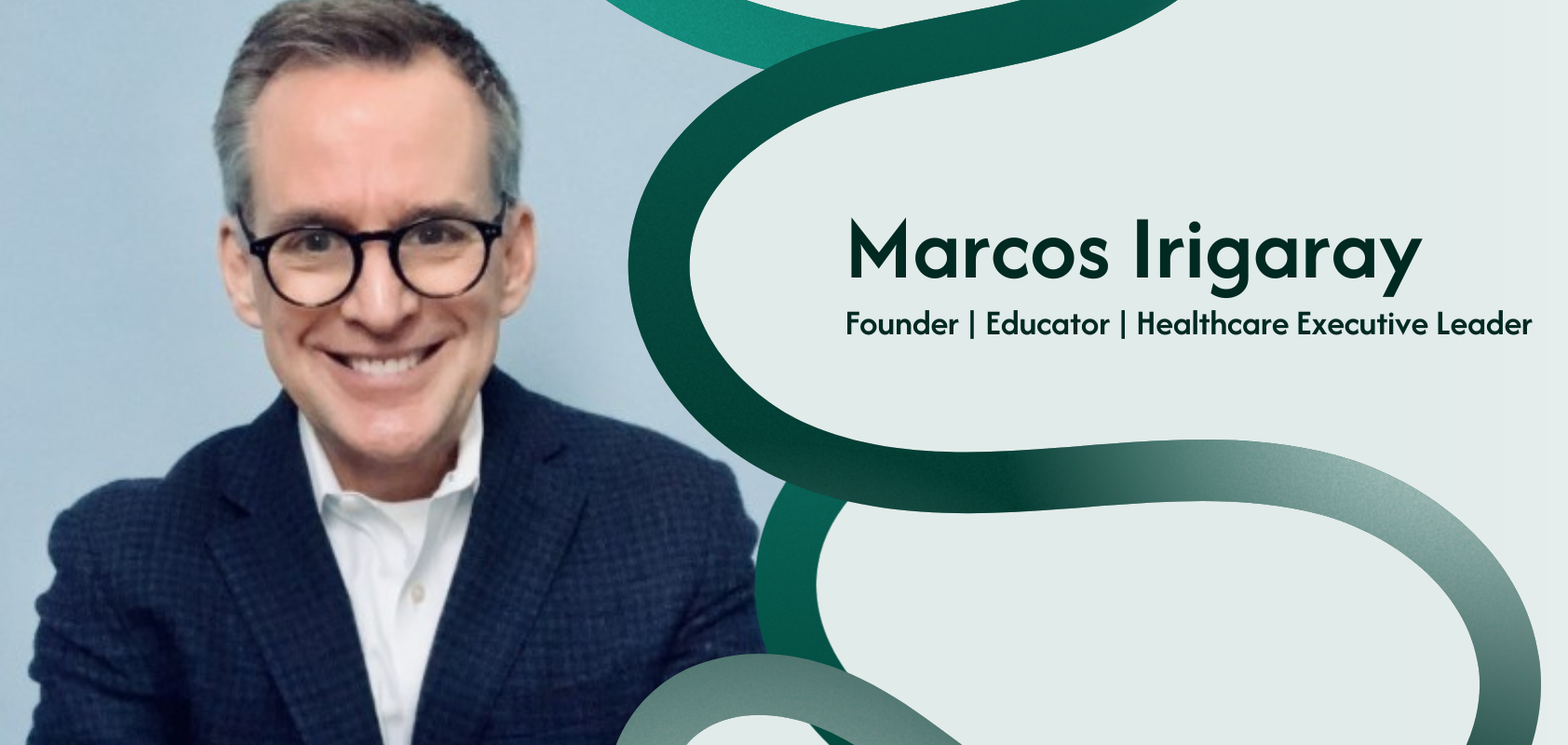
Marcos Irigaray Fractional Executive with Venturous
With decades of experience spanning academic health systems, healthcare strategy, brand transformation, and executive leadership, Marcos Irigaray brings a rare combination of institutional knowledge and human centered leadership to every role he takes on. His career has been shaped by navigating complex organizations through moments of change, from large scale health system integration and brand evolution to stakeholder alignment across universities, hospitals, and community partners. Throughout it all, Marcos has remained focused on clarity, trust, and purpose as the foundation for lasting impact.
Today, Marcos is entering the next chapter of his career as an independent consultant and educator, teaching graduate level healthcare marketing while exploring fractional and interim leadership opportunities. Drawn to work that is deeply collaborative and mission-driven, he is energized by helping teams make sense of complexity, align around shared goals, and move forward with intention. In this Executive Edge Spotlight, Marcos reflects on the experiences that shaped his leadership philosophy, the importance of authentic community, and why he believes the future of leadership will be defined by focused contribution, flexibility, and connection.
Q: To kick us off, can you tell me a little bit about yourself, your career, and what’s brought you to where you are today?
Marcos: I’m thrilled to be part of this community. I’ve been looking for a platform like this for a while. I’m involved in other groups, but this one feels more focused on people with similar objectives who come from different directions, which is exciting.
My background spans many years in healthcare administration, primarily within academic health systems. Where I am today working as an independent consultant. I have a small boutique LLC where I do contract work with larger firms, either advisory or consulting.
More recently, I’ve also picked up part-time teaching as an adjunct faculty member at Virginia Commonwealth University, teaching Healthcare Marketing to graduate students in the Master of Health Administration program. That’s been new and exciting, building a curriculum, holding office hours, grading papers, and tests. It’s been a lot of fun and very energizing.
Q: Looking back on your career, what experiences have shaped not only how you lead, but how you’re now teaching future generations?
Marcos: It’s been an amazing career, and I’m very fortunate to have had the experiences I’ve had. It’s hard to distill it down, but I’d group it into three major experiences across different periods of time. The first was my arrival at VCU in 1995 and becoming part of the administrative team at what was then the Medical College of Virginia and MCV Hospitals. At that time, MCV and VCU felt like two separate entities. MCV had a legacy going back to 1838, and that legacy was still competing with the university’s identity.
A big challenge was figuring out how to create unity. That took decades. It started with creating an authority model for the health system, renaming it VCU Health System, and eventually launching the VCU Health brand in 2015. That process required honoring the historical context, including both incredible medical advances and more complicated parts of the past, while clearly moving the organization forward.
Another major experience was the creation of the Children’s Hospital of Richmond at VCU. There was significant pressure from the community to create an independent, freestanding children’s hospital and to have VCU essentially give up its pediatric care. That led to a decade-long struggle with powerful stakeholders. Ultimately, the result was a children’s hospital that is part of VCU, protecting the institution while serving the community.
The third experience was COVID. Being in an academic health system and safety net hospital during that time was intense. It required rolling up our sleeves quickly and figuring out how to take care of people and take care of each other. That experience still shapes how I think about leadership today.
Q: You’ve worked in so many different settings, including through COVID. How did those environments shape how you align people around a shared vision or goal?
Marcos: Each experience built on the next. With the creation of VCU Health, we had to align a lot of people around moving away from the Medical College of Virginia to a unified VCU Health identity. That required leadership at the highest levels, university presidents, CEOs, deans, department chairs, and the broader community, understanding why the change mattered.
With the Children’s Hospital effort, there were real internal divisions, even at the board level. Some believed divesting pediatric care made sense, while others felt strongly that it would compromise the School of Medicine. Aligning smart, passionate, and powerful people with strong opinions was challenging.
COVID was different. Everyone’s back was against the wall. We had just launched an internal communications platform a couple of months earlier, and it became our source of truth. Without it, we would have struggled to unify the organization through the pandemic.
Q: A lot of your work sits at the intersection of data and storytelling. How do you balance analytics with human connection when driving change?
Marcos: They’re deeply connected. Data is just data unless you understand your audience. Whether you’re telling a story or presenting analytics, you need to know what you want the audience to understand, how you want them to feel, and what you want them to do.
I’ve learned over time that you can present beautiful dashboards and graphics, but if the intent isn’t clear, people get overwhelmed or disengaged. You must think carefully about what action you want to drive.
In academic environments, especially, people want rigor. They want to see the raw data and interrogate it. So, you tell the story in the presentation, but you also provide transparency and access to the data so there can be trust and credibility.
Q: At this stage in your career, what kind of work is energizing you the most?
Marcos: What energizes me most is being part of a community and a team. Teaching brought that back into my life. Being involved with students and faculty gave me that sense of connection again.
I’m also excited about being part of the Venturous community and working with firms that see value in bringing me in on a fractional or interim basis. I can work independently, but I’m energized by collaboration, tackling challenges together, whether that’s growth, product issues, or strategic direction.
Q: Venturous is very focused on community. In a professional context, what does community really mean to you?
Marcos: Community is about relationships. It’s moving beyond something transactional and building trust over time.
In a real community, people are open about what they have to offer, what didn’t work, and where they may have blind spots. It’s about giving and receiving honest, constructive feedback. That’s where the real value comes from.
Q: What felt missing from traditional executive networks that made Venturous appealing?
Marcos: Venturous is focused on individuals who want to work in a fractional or interim capacity with organizations that need their talent. Other groups I’ve been part of were either very broad or role-specific.
What stands out here is the diversity of experience within that shared focus. I’ve already seen talent in this community doing things I’ve only heard about or observed. There’s a lot to learn from one another.
Q: What makes a professional community genuinely valuable versus transactional?
Marcos: It comes down to showing up genuinely, being transparent, and building trust over time. Platforms help, but real value comes from conversations, from organic interactions like this one.
When opportunities emerge naturally because people know and trust one another, that’s when a community becomes meaningful.
Q: What advice would you give to leaders who are hesitant to invest time in a peer community?
Marcos: If you are curious, it’s worth exploring. Even the process of joining can be valuable. I learned things about myself just by going through it, including how some of my leadership traits have shifted over time.
As the community grows, the value grows with it.
Q: Looking ahead, what role do you think communities like Venturous will play in the future of leadership and work?
Marcos: Fractional and interim work allows experienced leaders to contribute in focused ways while maintaining balance in their lives. People want to continue doing meaningful work, but with more flexibility. Communities like this bring together leaders at different stages who want to apply their experience intentionally. I think that model will continue to grow.